Skip to content

Toufiq SEO

Foundation repair SEO · Slab, basement, crawl space and pier work

Foundation repair SEO that turns worried searches into booked inspections.

I’m Toufiq, an independent SEO consultant. I help US foundation repair contractors get found by homeowners who just noticed a crack, a sloping floor or a bowing basement wall, and by sellers, buyers and agents who need answers before a closing date. The goal is more inspection requests from people in your service area, with enough detail to know what you are walking into.

Symptom pages that lead to an inspectionSlab, basement, crawl space and real estate workMeasured in inspections and signed jobs
Three foundation repair searches
1Basement wall crackWorried homeowner
Symptom page
2Sloping floorNot sure yet
Signs guide
3Flagged before closingSeller or agent
Closing page
One services page answers none of themSymptom to inspection one clear next step
How buyers search here

How homeowners find and choose a foundation repair company

Foundation repair is expensive, stressful and hard for a homeowner to judge. Most people do not search for a repair method. They search for what they see, then try to work out whether it is serious and who they can trust to tell them the truth. Your pages decide whether that research ends with an inspection request from you.

01

The homeowner who just noticed something

They search “crack in foundation wall”, “is this foundation crack serious”, “doors sticking and floor sloping” or “foundation repair near me”. They are worried, they do not know the vocabulary and they fear being sold a large job they do not need.

Decided on honesty and clarity

02

The seller, buyer or real estate agent

They search “foundation inspection for home sale” or “foundation repair before closing”. An inspection report has flagged something and there is a deadline. They need a fast visit, a written assessment, a clear price and often a warranty that can transfer to the next owner.

Decided on speed and paperwork

03

The owner with a basement or crawl space problem

They search “bowing basement wall repair”, “crawl space sagging floor” or “wet basement and cracks”. Water and structure are often tangled together for them, and they want one company that can explain which problem is which and what fixes it.

Decided on diagnosis

Sector challenges

Where foundation repair companies lose inspection requests

Most foundation repair websites I review list services in contractor language and expect the homeowner to know what they need. The people searching do not know whether they need piers, wall anchors or nothing at all. That gap is where good companies lose the first contact.

01

Pages named after methods, not symptoms

“Push piers”, “helical piers” and “slab jacking” are how you think about the work. Homeowners search for cracks, sloping floors and sticking doors. Without pages that start from what they see, you miss most of the early searches in your area.

Missed early searches
02

Nothing that reduces the fear of an upsell

Foundation work is a large purchase and many homeowners expect high-pressure sales. A site that never explains what the inspection includes, what it costs, how you decide on a repair and when you would recommend no repair at all gives them every reason to keep looking.

Lost trust
03

No path for real estate deadlines

Sellers, buyers and agents need a fast visit, a written report and a clear answer on warranty transfer. When those needs are buried on a general contact page, time-sensitive requests go to the company that made them easy.

Lost urgent work
04

Service area claims the map cannot support

Listing forty towns in a footer does not make you visible in them. Without real service-area pages, completed jobs and reviews tied to those areas, the map results keep showing the same nearby competitors.

Weak local reach
What this costs a foundation repair contractor
Inspections that go nowhere

Driving out to look at cosmetic hairline cracks, or homes far outside your area, takes your estimators away from homeowners who actually need structural work.

Losing the job to the first honest answer

The homeowner often books the company whose site explained their symptom calmly and clearly, even if your crew is better and your warranty is stronger.

Paying for shared leads

When organic search does not bring inspections, the gap gets filled with lead services that sell the same homeowner to several contractors at once.

Where I would start

What I would actually do for your foundation repair business

I start with what decides whether a worried homeowner or an agent with a deadline contacts you at all, then build pages that match how people search for foundation problems. Every step ties to a real decision.

01

Set up your Google Business Profile for inspections, not just a name

Your primary category should match your core work, with secondary categories only for services you genuinely offer, such as basement waterproofing or crawl space repair. I list inspections, slab repair, pier installation, wall stabilization and crawl space work as separate services, add captioned photos from real jobs and set a service area your estimators actually cover. This is the core of my local SEO work.

For every nearby search
02

Build pages around symptoms and the repairs behind them

Separate pages for foundation cracks, sloping or uneven floors, sticking doors and windows, bowing basement walls and sagging crawl space floors, each explaining what the sign can mean, when it is usually cosmetic and when it needs a professional look. Each one links to the repair methods you use and to the inspection request. Matching pages to these searches is a big part of my on-page SEO.

Each worry finds its page
03

Make the inspection request easy and honest

A short form that asks what they noticed, where in the house, how long it has been there, whether there is water, the age and type of foundation if they know it, and room to upload photos. Next to it, a plain description of what the inspection includes, what it costs or whether it is free, and what they receive afterwards. You arrive better prepared, and fewer requests go cold.

Better first contact
04

Publish guides that answer the questions people are scared to ask

What a foundation repair usually costs and what changes the price, how to tell a settlement crack from a structural one, when to bring in a structural engineer, how warranties and transfers work, and whether financing is available if you offer it. I help you write these in your own numbers and terms. This kind of planning and trust content is part of my content strategy.

For the early researcher
05

Create a real estate page for sellers, buyers and agents

Explain how quickly you can visit, what your written assessment covers, how you handle inspection contingencies and whether your warranty transfers to a new owner. An agent who finds a contractor that makes closings easier has a reason to call again, and this page gives them something to share with clients.

Faster, time-sensitive jobs
06

Keep the site fast and clear on a phone

Many of these searches happen on a phone while someone is standing in the basement looking at a crack. Slow pages, heavy galleries and a phone number that is hard to tap cost you inspections. I check speed, mobile layout, indexing and how service-area pages are structured through my technical SEO fixes.

Fewer abandoned visits
A typical engagement

A typical engagement, step by step

01

Review your visibility and inspection flow

I check where you appear for symptom, repair and real estate searches across your service area, and how a visitor actually requests an inspection on your site today.

A ranked list of what is losing inspections
02

Fix the profile and the request path

Categories, services, photos and service area on your Google profile, plus an inspection form and an honest explanation of what the visit includes.

Quick wins in the first weeks
03

Build the symptom, repair and trust pages

Symptom pages, repair method pages, a real estate page, cost and warranty guides, and job write-ups from completed repairs in the towns you serve.

Pages for each worry and each repair
04

Report on inspections and signed jobs

Calls and inspection requests by source and by page, checked against the inspections you ran and the repairs you signed, so we know which pages bring in real structural work.

A monthly report in inspections, not just traffic
Sector questions

Questions foundation repair contractors ask me

01Can you guarantee my foundation repair company will rank first?+
No. Rankings depend on where the searcher is, what they typed and how your business compares with nearby competitors, including national brands, and nobody controls Google's results. What I promise is a clear diagnosis, work done in the right order and honest reporting on calls, inspection requests and signed jobs.
02Will symptom pages attract people who do not need a repair?+
Some, and that is useful. A clear page that says hairline cracks are often cosmetic builds trust and keeps those visitors from booking a wasted inspection. The same page tells people with wider, growing or stair-step cracks, sticking doors or sloping floors that it is worth a professional look, and makes the next step easy.
03Should I publish prices for foundation repair?+
I usually recommend honest price ranges and an explanation of what changes the cost, such as the number of piers, access, depth to stable soil, wall length and whether water management is needed. Homeowners expect a large number and fear surprises. Explaining how you price builds trust. You decide what numbers to share.
04How do I compete with national foundation repair brands?+
Mostly locally. National brands have strong websites, but they cannot fake local proof. Job write-ups from specific towns, reviews that mention the work, a well-run Google profile and pages that explain local soil and building patterns in your own words give you an edge in the areas you actually serve.
05Is it worth targeting real estate searches?+
Usually, yes. Pre-sale and pre-closing work is time-sensitive and often comes with an inspection report already written. A page built for sellers, buyers and agents that explains your response time, your written assessment and your warranty transfer policy can bring in jobs that close faster.
06What about basement waterproofing and crawl space work?+
If you offer them, they deserve their own pages, linked to the related structural pages. Homeowners often cannot tell water problems from structural ones, so content that explains how the two connect, and how you diagnose which one they have, is useful for them and for search.
07How long before I see more inspection requests?+
Profile improvements and a clearer inspection path can help within a few weeks. New symptom and repair pages usually take two to four months to rank, and longer in competitive metro areas where national brands are active. I will give you an honest expectation for your market before you commit.
08How will I know SEO is bringing signed jobs and not just visitors?+
I track calls and inspection requests from your Google profile and website by page and by source, then compare them with the inspections you ran and the repairs you signed. Rankings and traffic are useful signals, but signed structural work is the result that matters.
09What happens after I contact you?+
You send your website, your Google profile and the area you cover. I review them before we speak, so the first call is about your business. If SEO is the right fit, I send a written scope with a fixed price agreed before any work starts. If it is not, I will say so.
A deeper look

Why foundation repair SEO works differently

Foundation repair sits in an unusual place. The jobs are large, the customer cannot inspect the problem themselves, and fear plays a bigger role than in almost any other home service. SEO for this trade is less about appearing for “foundation repair” and more about being the company that explains the problem calmly at the moment someone is worried.

Homeowners search for what they see

Very few homeowners search for a push pier or a wall anchor first. They search for the crack above the door, the gap between the floor and the baseboard or the bow in the basement wall. A contractor with a page for each of those signs, written in plain language and showing real examples, meets them at the start of their research instead of the end.

Vertical crack running through an exterior concrete wallThe search starts with the symptom
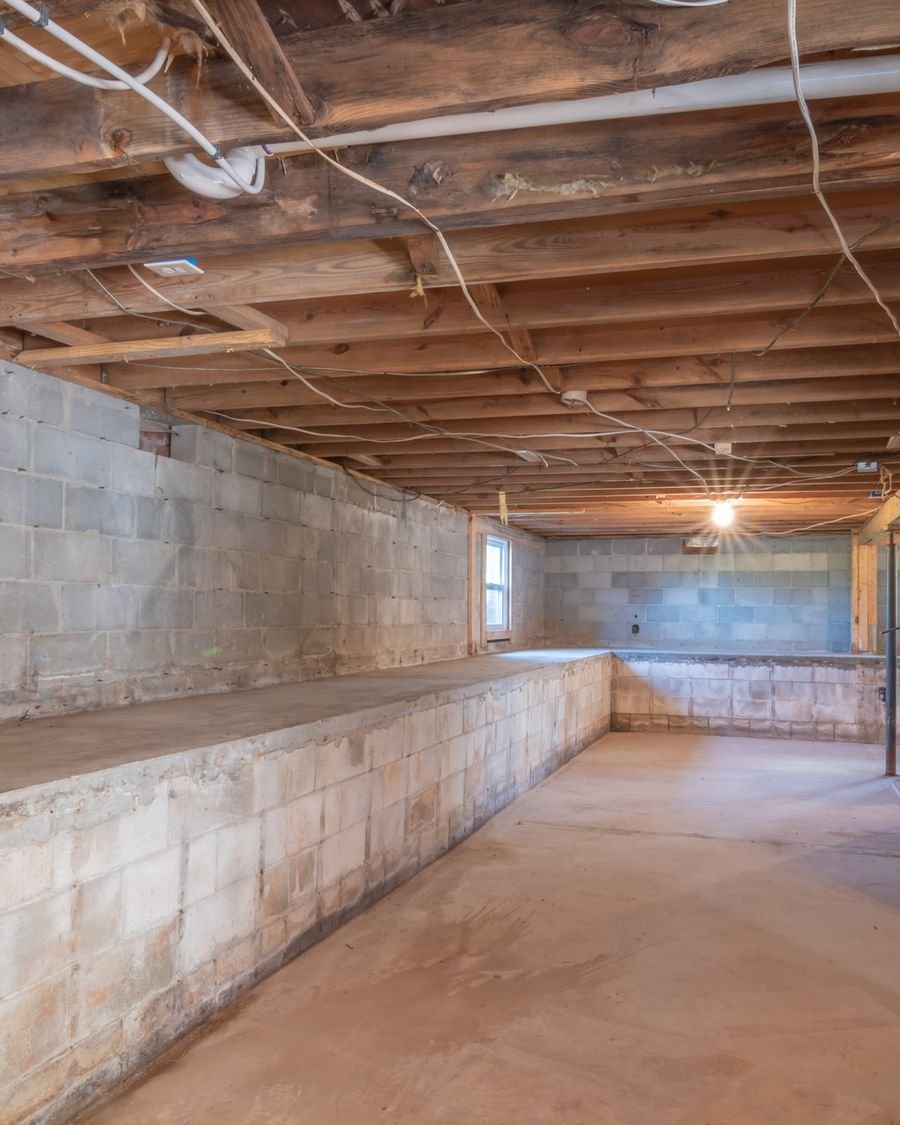
Unfinished basement with concrete block walls and exposed floor joistsBasements and crawl spaces need their own pages
Homeowners search what they see, not the repair method. Photos: Pexels.

From there, the page should explain the likely causes, when a crack is usually cosmetic, which signs suggest movement, and what happens during an inspection. Linking each symptom page to the repair methods you use, and to the inspection request, turns a worried search into a booked visit.

Trust is the real conversion factor

A homeowner facing a large repair bill is comparing honesty more than price. They want to know what the inspection costs, who does it, whether they will get a written report and whether you will tell them if nothing needs doing. Pages that answer those questions directly, alongside job write-ups that show the before, the method and the result, do more for your inspection rate than any slogan about quality.

Soil, region and housing stock matter

Foundation problems follow local conditions. Expansive clay soils, freeze and thaw cycles, older basements, pier-and-beam homes and drainage patterns all vary by region, and homeowners in your area search with those realities in mind. Content written about the soils, house types and common problems in the towns you serve is more useful to them, and harder for a national competitor to copy, than a generic guide to foundation repair.

How I measure results for a foundation repair company

I track calls and inspection requests by source and by page, then compare them with the inspections you ran and the repairs you signed. Symptom pages often bring the most requests and the most cosmetic cases, while real estate and repair method pages may bring fewer requests with a higher signing rate. Looking at both lets us put effort where the profitable work comes from, rather than chasing traffic.

Why work with me

If you are comparing a foundation repair SEO agency with an independent consultant, the main difference is who does the work. With me, the person who audits your profile is the person who fixes it and reports to you. Before going independent, I managed SEO for a US agency team of more than twenty webmasters, content managers and copywriters. I do not have a foundation repair case study to show you, and I will not invent one. Instead, I will review your own profile and site before our call and tell you plainly what I would fix first. Much of the approach builds on my wider home services SEO work, adapted to how foundation contractors inspect, quote and win structural jobs.

Ready for a clearer plan?

Find out which foundation searches you are missing.

Send me your website, your Google Business Profile and the area you cover. Before we speak, I will check where you appear for symptom, repair and real estate searches and how easy it is to request an inspection from you.

Prefer email? toufiqseopro@gmail.com

What happens next

  1. You send the URLPlus anything already tried, so I do not repeat it.
  2. I review it firstBefore we speak, so the call is about your site specifically.
  3. Twenty honest minutesIncluding telling you if a different service fits better.
Limited engagements each quarterReply within 24 hoursWorking with US businesses
Scroll to Top