Start here
SEO Content Strategy
Cost, timeline and design guides published months before the spring buying season.
For pool buildersExplore →
I’m Toufiq, an independent SEO consultant. Homeowners planning a new pool spend a long time looking at ideas, prices and builders before they ask anyone to visit the backyard. I help US custom pool builders show up during that research, so the design consultation requests that do come in are from people with a real project, a realistic budget and a reason to choose you.
Few people search “pool builder” on the day they first imagine a pool. They save ideas, try to work out what it will cost, worry about the mess and the timeline, talk it over with whoever they share the house with, and only then shortlist builders. By the time they request a consultation, most have already formed a view of who seems trustworthy. The builders who appear at each of these stages are the ones on that shortlist.
I only build pages for the pool types you actually sell. Where you sell more than one, each type deserves its own page, because the person reading it arrives with different priorities and different doubts.
Usually drawn by freedom of shape, finishes, tile, water features and a pool designed for one particular yard. They judge you on design range and on how your finished pools look up close, and they expect the build to take longer. Deep project pages and design pages persuade them more than any list of services.
Decided on design depth
Often wants a faster installation and a lower-maintenance surface, and has frequently picked a shape or model line before calling. Many search by manufacturer or model name. If you install particular models, pages for those models, with photos of your own installs, meet them exactly where they are searching.
Decided on model and install
Typically watching the budget and asking practical questions: how long a liner lasts, what replacement costs, how it compares with fiberglass. An honest comparison page earns trust here, and it also filters out people whose expectations do not match what vinyl delivers.
Decided on value
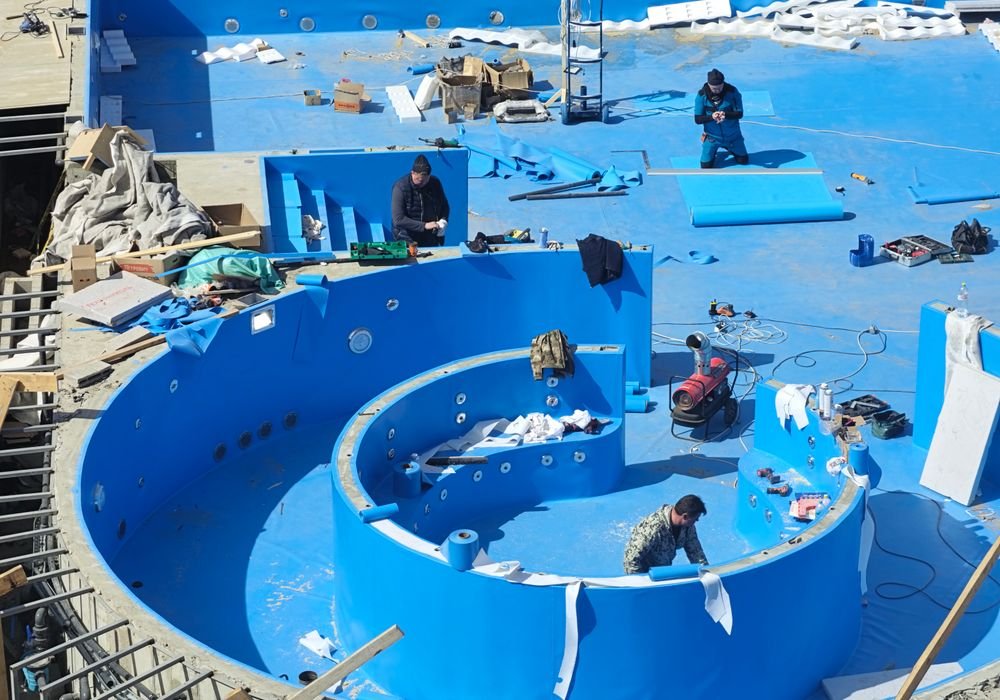 During the build: what buyers worry about
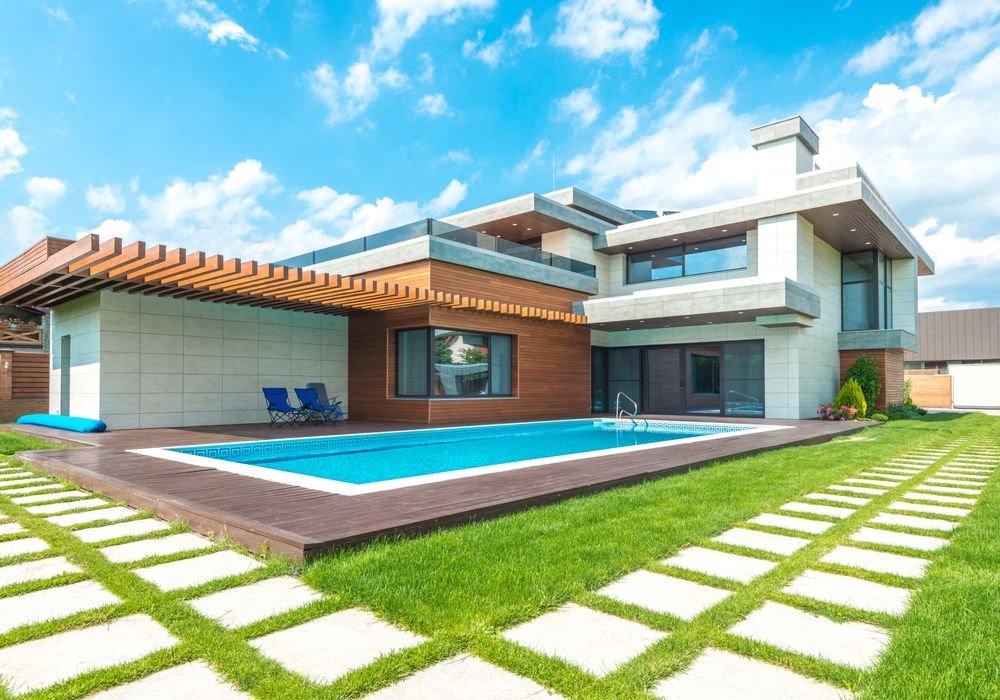 After the build: what buyers hope for
Most pool builder websites keep their best work in a gallery of untitled photos. That gallery may impress a visitor who already found you, but it gives Google almost nothing to understand and gives a nervous buyer no answers. A project page for each build does both jobs.
A good project page names the town, the pool type and size, the features, how long it took from dig to first swim and what made the yard tricky, such as a slope, tight access or HOA design rules. It shows the dig and the steel or the shell going in, not only the finished photo, because those in-progress shots answer the quiet fear many buyers have about a half-finished hole in their backyard. Where a client has genuinely said something about the experience and agreed to share it, it goes on the page. Where they have not, nothing is made up.
Over a few seasons, these pages add up to a body of local proof that a national lead service or a builder from two counties away cannot copy, and they tend to be what people find when they search for pools in their own town.
A backyard visit costs you an evening, a designer’s time and often a 3D design or a detailed estimate. Visits with people who were never going to build are the most expensive leads you get. The page that sells the consultation should do two things at once: make serious buyers want it and make poor fits notice that before they book.
That means saying plainly what happens at the visit, how long it takes, whether there is a charge or a credit toward the build, and what the homeowner leaves with, whether that is a 3D design, a written estimate, a rough timeline or financing options if you offer them. Then a request form that asks the questions on the right, in a tone that feels like helpful planning rather than a sales screen.
Done well, fewer requests can mean more signed contracts. That is a trade I will recommend when your calendar is already full of the wrong visits.
Pool building is seasonal in most of the US, and so is the research behind it. The pages people read while planning need to be live and indexed before they start planning, so the first half of the work is timed for your quieter months.
Pages that are not indexed, galleries so heavy they stall on a phone, a consultation form that quietly fails, duplicate pages competing for the same search. I start with a focused SEO audit so the rest of the work lands on solid ground.
The Swimming pool contractor category, your real service area, photos of finished pools and builds in progress, design and installation listed as services, and a steady way to ask for reviews at handover. This is the local part of my local SEO service.
A cost guide by pool type, a process and timeline page, permits and HOA approvals, financing if you offer it, and pages for the pool types and features you build. Choosing and ordering these around your market is the heart of my content strategy work.
Published while the photos are fresh: town, type, size, features, timeline and what made the job unusual. Linked from the matching pool type and feature pages.
Compressed photos, properly loaded galleries and 3D renderings or videos that do not block the page. Project and service pages get structured data that matches what is on them. These are standard parts of my technical SEO work.
Pool buyers ask about fencing, gates and local barrier rules. A clear page on how you handle them, and who you work with for fencing, removes a worry late in the decision. Fence contractors face the mirror image of this, which I cover on my fence company SEO page.
For a pool builder, the useful question is not how many visitors the site had last month. It is how many consultations came from search, how many of those became designs, and how many became contracts. I track each step, using your CRM or a simple lead sheet and a “how did you find us” question asked at the visit.
I also leave the lag in the report instead of hiding it. A contract signed in spring may trace back to a cost guide someone read the previous fall. So alongside the monthly numbers, I look at the season as a whole: which pages started the conversations that eventually signed, and which brought requests that never went anywhere. That is how we decide what to build next.
Long sales cycles punish short-term thinking. Pool builders need someone who will plan a season ahead, publish the right pages before they are needed and be patient enough to judge the work on contracts rather than on a single month’s traffic.
That is how I like to work. I am an independent consultant, so you deal with me directly from the first audit to every monthly report. Earlier in my career I led SEO for a US agency, managing more than twenty webmasters, content managers and copywriters, which is where I learned to plan content in seasons and to measure it against what the business actually sells. More about that is on my about page.
I have not worked with a pool builder yet, so there is no pool case study here, and I will not borrow results from another industry to suggest otherwise. Before our first conversation, I will look at your site, your Google profile and how you appear for pool searches in your area, and you can decide from that whether my approach makes sense for you.
The services pool builders most often need, in the order I usually recommend them. Each one links to the full details, and you only need the ones that fit your situation. See all thirteen services.
Cost, timeline and design guides published months before the spring buying season.
Service area and project pages that show pools built in each community.
A profile filled with finished pools, materials and real reviews.
Links from suppliers, home shows and local media that support high-value searches.
These businesses share customers, searches or seasons with pool builders. Each page explains how SEO works in that industry. Browse all industries.
Backyard projects planned with the pool.
See the approach →Related industryDecks, patios and hardscape around pools.
See the approach →Related industryPool barriers and backyard fencing.
See the approach →Related industryNew homes with pools in the plan.
See the approach →Related industryHow I approach SEO for trades and home service companies as a whole.
See the approach →Related industrySoil and structural questions pools share with foundations.
See the approach →Send me your website, your Google Business Profile, the area you build in and the pool types you want more of. Before we talk, I will check where you appear across the research stages above and how your consultation request works on a phone.
Prefer email? toufiqseopro@gmail.com